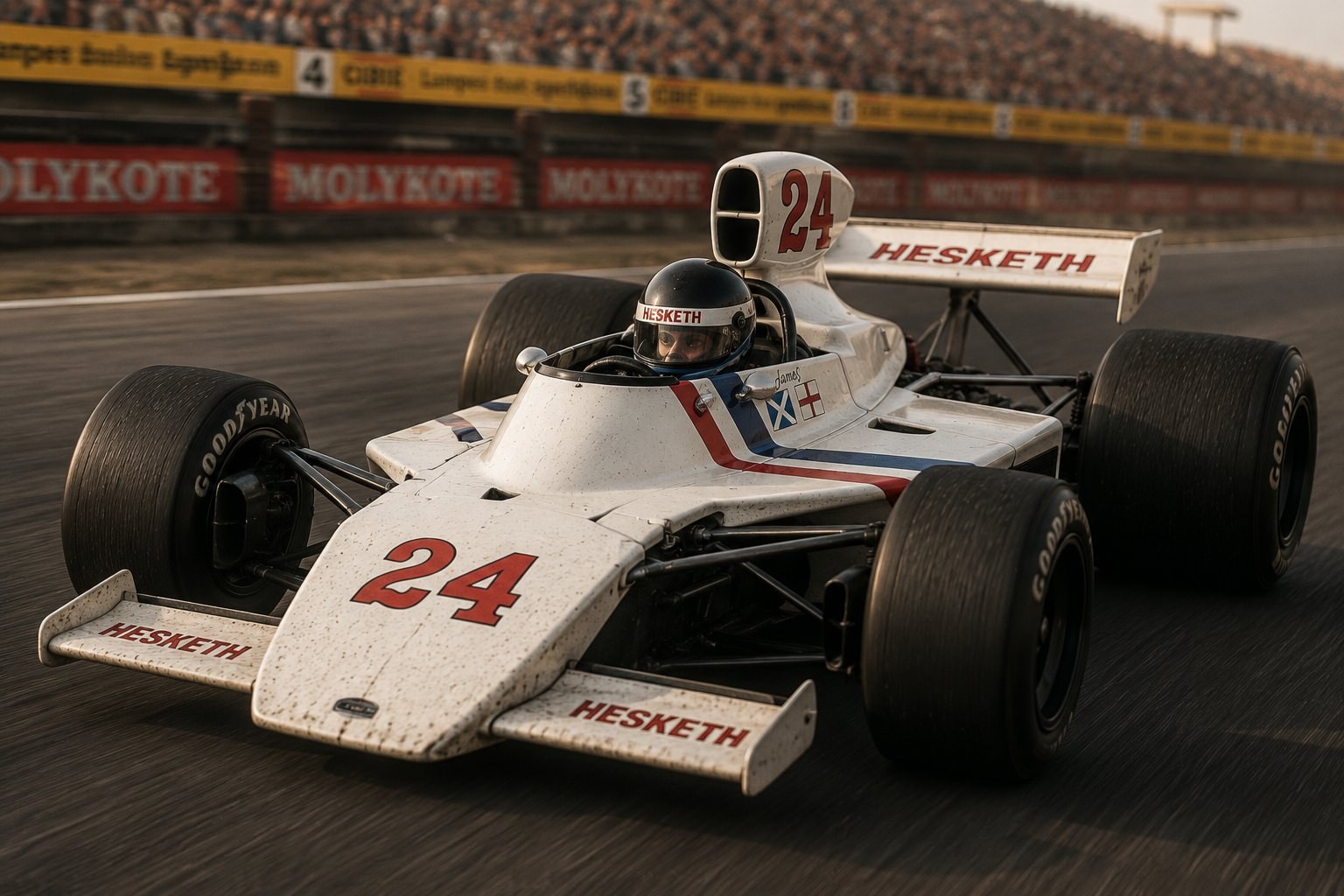
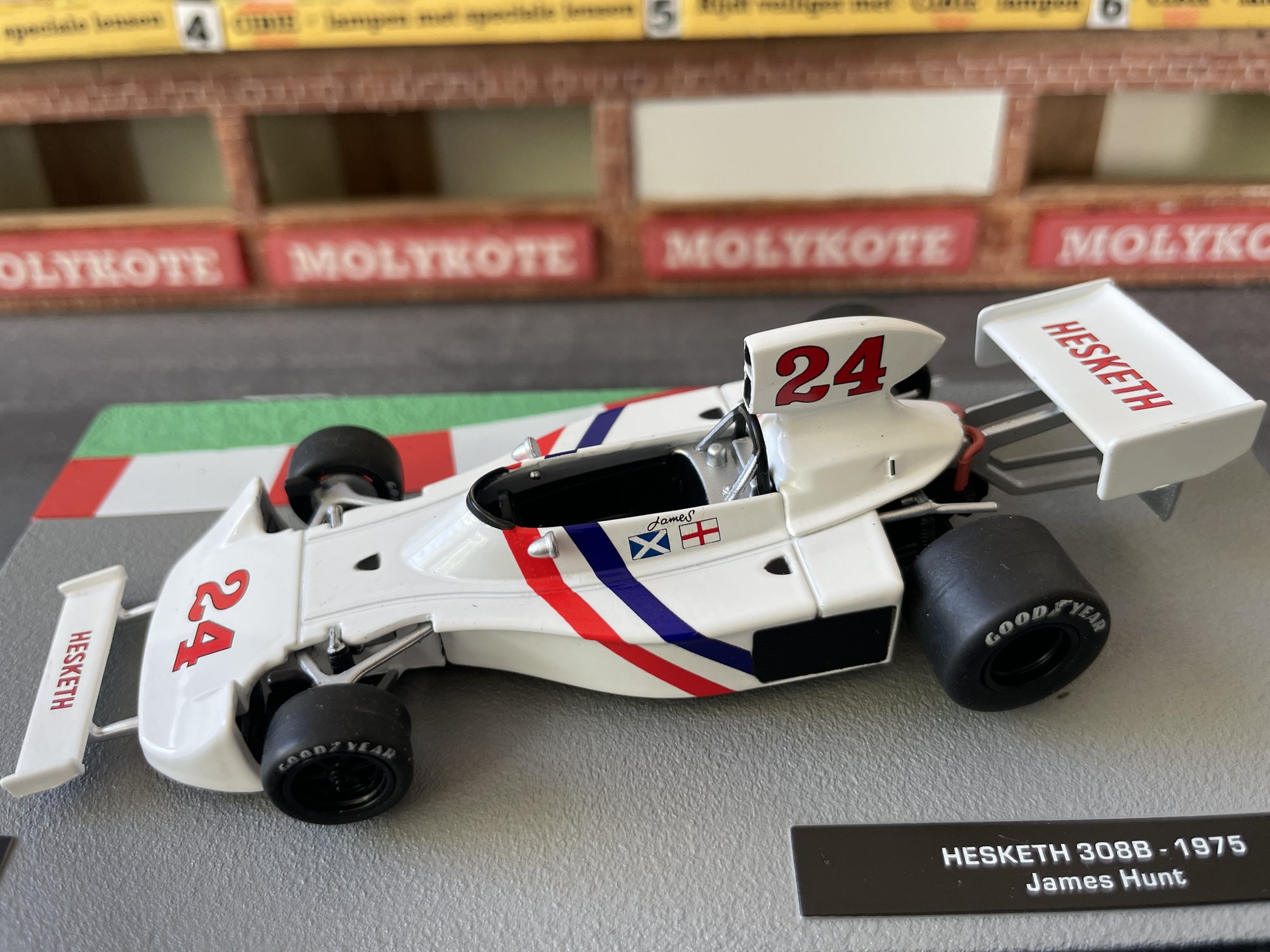
Lord Alexander Hesketh was 23, enormously rich from an inheritance, and keen to race in Formula 1. He started out driving himself — without success. When he realised he was not fast enough, he hired James Hunt, an English upper-class playboy with a handful of Formula 3 results and no contract. Together they entered the 1973 season. Everyone laughed at them!
Two years later nobody was laughing. On 22 June 1975, at Zandvoort, James Hunt won the Dutch Grand Prix in a Hesketh — a team that had not a single sponsor on the car. Not one logo. It was their first Grand Prix win, and it would also be their last.
The Hesketh 308B was the further development of Harvey Postlethwaite's own design. No revolution, just a sound, light chassis with a standard Cosworth DFV. What made Hesketh different was the mentality — no sponsor obligations, no marketing tour, no meetings. Lord Hesketh paid for everything out of his own pocket, and the party came first. Hunt was allowed to stay up late, allowed to go to the pub, allowed to be himself.
But 1975 was the end. Hesketh's personal fortune ran out — F1 was simply too expensive to do without sponsors. At the end of '75 Hunt left for McLaren, to take the place of Emerson Fittipaldi. A year later, in 1976, Hunt became world champion with McLaren. The season Ron Howard would later make the film 'Rush' about — with Niki Lauda's near-fatal crash at the Nürburgring and Hunt's title in the rain at Fuji. But that is another story.
Hesketh Racing carried on until 1978, with drivers who paid for their seats and ever fewer resources. Lord Hesketh called it a day when the money ran out. He sold his factory to Frank Williams — who set up Williams Grand Prix Engineering there. Quite literally: the FW07 in which Regazzoni took Williams's first victory in 1979 was built in Hesketh's former factory.