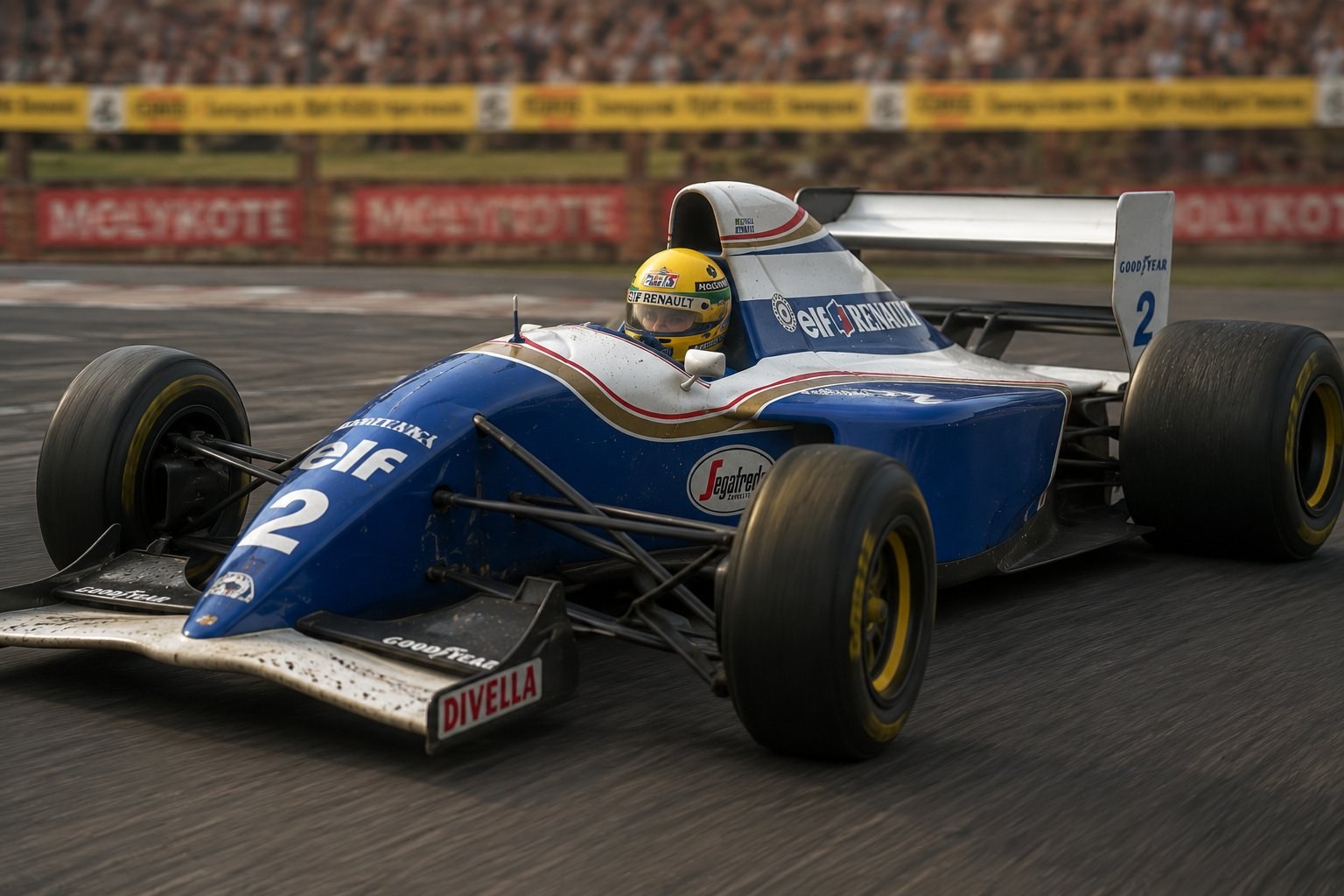
At the end of 1993 Ayrton Senna signed a three-year contract with Williams. It was the car he had wanted for years: the car of Mansell ('92) and Prost ('93), both of whom had become world champion in a Williams-Renault. Now it was his turn. After six years at McLaren, three world titles and endless frustration at being down on equipment, here at last was a car that seemed worth a title on its own.
But 1994 began differently from what anyone had expected. For this season the FIA had banned all electronic driver aids — active suspension, traction control, ABS, automatic gearboxes. All gone. Williams had built its FW15C of '93 largely around those electronics. The FW16 that grew out of it was nervous, unpredictable and difficult to handle at low speed. Senna felt it straight away.
In race one — Brazil, his home country — he got no further than lap 56 before spinning off while trying to keep up with Schumacher's Benetton. In race two — the Pacific GP at Aida — he was tapped by Mika Häkkinen at the first corner and was out. After two races he was on zero points. Schumacher led with two wins. Race three was San Marino, at the Imola circuit.
The weekend of 30 April and 1 May 1994 stands in F1 history as the darkest weekend ever. On Friday Rubens Barrichello crashed heavily and was badly injured. On Saturday the Austrian Roland Ratzenberger was killed during qualifying. Senna talked to Berger and Damon Hill about refusing to race. On Sunday, on lap seven of the race, at Tamburello — a long left-hander that is normally taken flat out — Senna's steering locks. The FW16 went straight off the track and into a concrete wall at 218 km/h.
Damon Hill won six races that year, but missed the title by one point to Schumacher. Williams did take the constructors' championship — mainly because, over the whole season, the FW16 proved beyond doubt to be the best car. But that is not how this season is remembered. This is the car in which the unthinkable happened. The car that will forever be linked to that black Sunday afternoon in May.
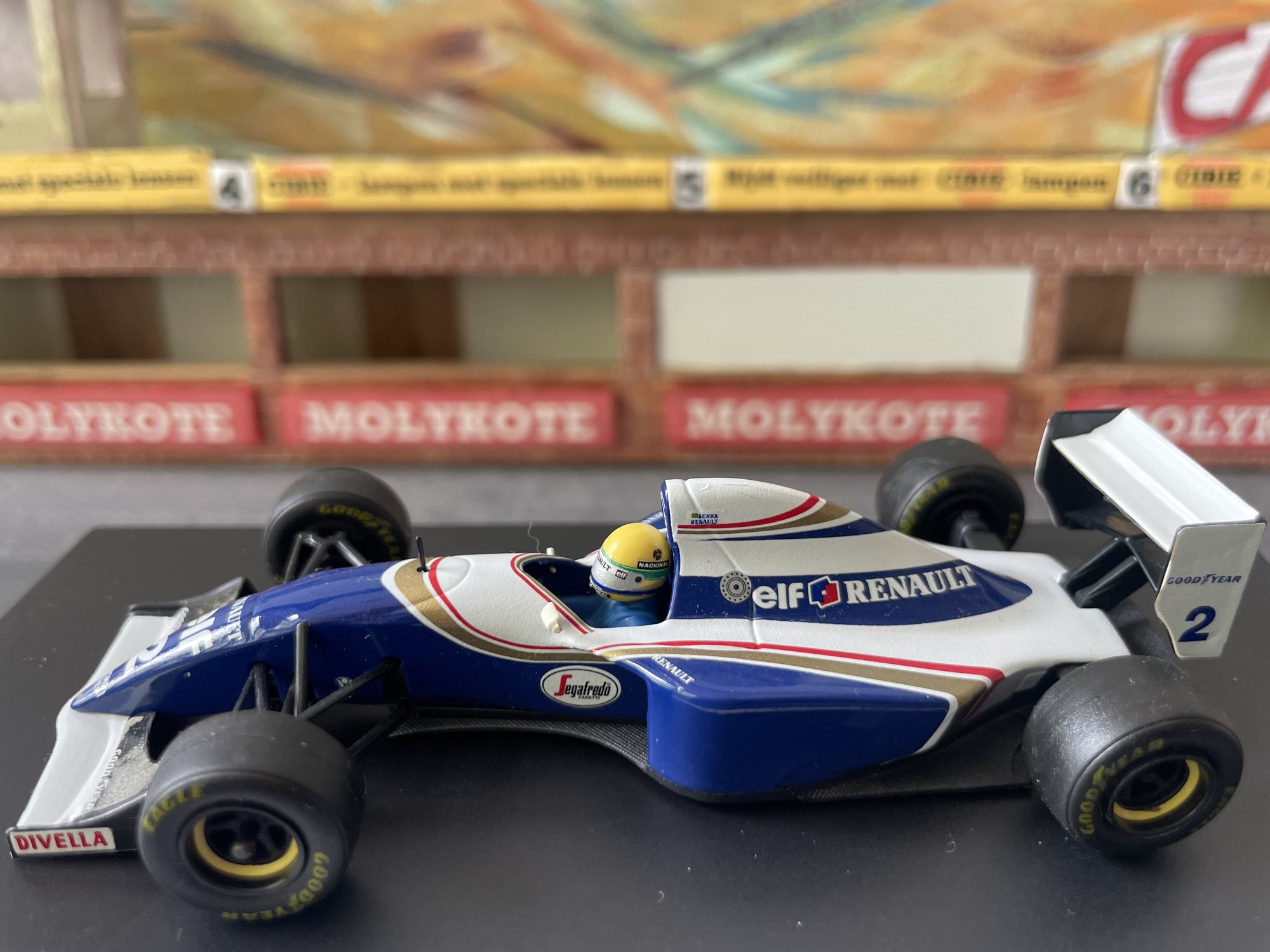
This model in my collection still carries Senna's number 2.